


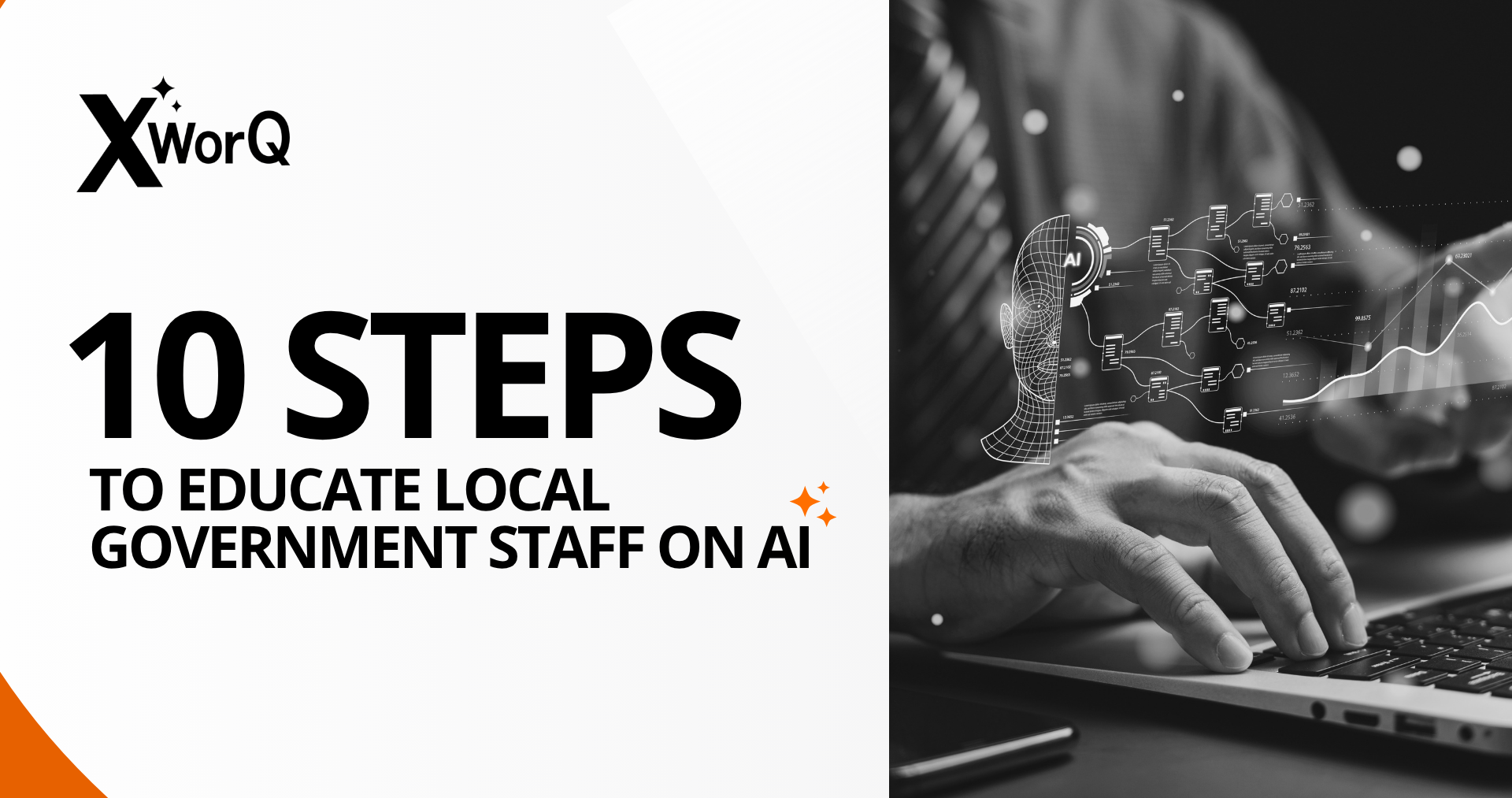
When done intentionally, AI can revolutionize outdated municipal processes, letting public servants spend more time on meaningful projects. Without careful governance, implementing AI into a municipal agency can cause major security risks and lead to a discouraged workforce. Here are 10 steps to responsibly educate and empower municipal agencies as they implement this new technology:

1. Start with Your People
AI implementation is as much about people as it is about systems. As AI becomes a part of everyday government operations, preparing workforces to use AI responsibly is critical. When approached thoughtfully, it can reduce repetitive work and allow public servants to spend more time doing what they do best, serving the public.
2. Build Foundational AI Awareness Across All Staff
Every employee should understand the basics of AI before incorporating it into their workflows. This includes what AI is, how it works, the risks involved, and where it appears in their daily tasks. When staff understand how AI generates responses and insights, uncertainty fades and confidence grows. Educated human oversight and AI confidence are essential for the responsible implementation of this new technology.
3. Deliver Role-Based, Practical Training
AI training should reflect real-world use. Different municipal departments will use AI in different ways. Permitting teams might extract details from submissions, code enforcement may interpret ordinances, and administrative staff may respond to resident inquiries. If the organization’s goal is to increase efficiency, training should largely focus on everyday scenarios instead of abstract capabilities.
4. Commit to Ongoing Learning, Not One-Time Training
AI evolves quickly, which means education cannot stop after rollout. Local governments should provide continuous learning through short resources, personal training sessions, or periodic updates. Some agencies may benefit from designating an AI implementation leader to stay current on policy and best practices.
5. Establish Clear Data Classification Policies
Strong governance starts with understanding your data, especially in local government. Agencies should clearly define what information can be shared with AI and what must remain restricted. Public documents may be appropriate to upload into AI systems, while sensitive or personal data must be tightly controlled. A combination of system controls and employee education should be deployed to ensure the security of sensitive resident data.
6. Implement Strict Access Controls
AI systems should be provided only for the roles that have relevant uses for them. Departments must be segmented appropriately to prevent unintended access to unrelated or sensitive records. This protects both internal operations and public trust. Most enterprise licensing packages contain administrative settings that flag when sensitive data is included in a prompt. Consider investing in AI licenses with reputable organizations rather than using free, unprotected versions.
7. Ensure Transparency and Auditability
Local governments need visibility into how AI is being used within their organization. This includes understanding what models are being used, what questions are being asked, what data is accessed, and how outputs are being generated. Transparency supports accountability and helps identify security risks before they become issues.
8. Demand Vendor Transparency and Data Protection
When working with third-party AI providers, agencies must know exactly how their data is handled. This includes where it is stored, whether it is shared, and how it is used. Maintaining control over government data is not optional. It is a core responsibility. Be sure to read the security policies of any AI provider before authorizing usage of that system. iWorQ's AI operates in the same ecosystem as the iWorQ system itself, ensuring stored data never leaves the secure environment. iWorQ does not use or export any client data to train AI models.
9. Position AI as a Tool for Augmentation, Not Replacement
AI should support employees, not replace them. The most effective use cases remove time-consuming tasks like document searches, data extraction, and reporting. This allows staff to focus on providing more meaningful interactions with residents and invest resources on higher-value projects.
10. Roll Out AI Gradually and Measure Impact
A phased approach to AI implementation reduces risk and builds confidence. Start with small internal pilots, expand across departments, and introduce public-facing tools later. At each stage, track key metrics such as time saved, faster processing, and improved accuracy. These insights guide smarter expansion tailored to the needs of each organization.
Conclusion
The most successful implementations of AI will not be defined by the technology itself, but by the people who use it every day. When staff feel informed and confident, AI becomes a tool that amplifies their impact instead of causing unnecessary confusion. At iWorQ, AI is used to simplify important government processes, not complicate it. AI is responsibly incorporated into relevant applications, aiming to uplift, educate, and improve the workflows of municipal employees.
This is a moment to be intentional. By prioritizing people, protecting data, and focusing on meaningful outcomes, agencies can harness AI to strengthen their mission to serve their community. When done responsibly, AI does not threaten the human side of public service. It gives each person more time, more capacity, and more room to thrive as an individual and strengthen their community.

Meet the Author
Emma Conway is an Emerging Technologies Administrator for iWorQ Systems. She is a graduate of the University of Utah and has worked in various roles for iWorQ and its partner company, TextMyGov, since 2024. Emma loves hiking and birdwatching in the nearby mountains.
Share This Article
[DISPLAY_ULTIMATE_SOCIAL_ICONS]
Recent News
You might also like
May. 01, 2024
April Showers, May Flowers: Clear the Storm with Stormwater Management Software
Jan. 26, 2022
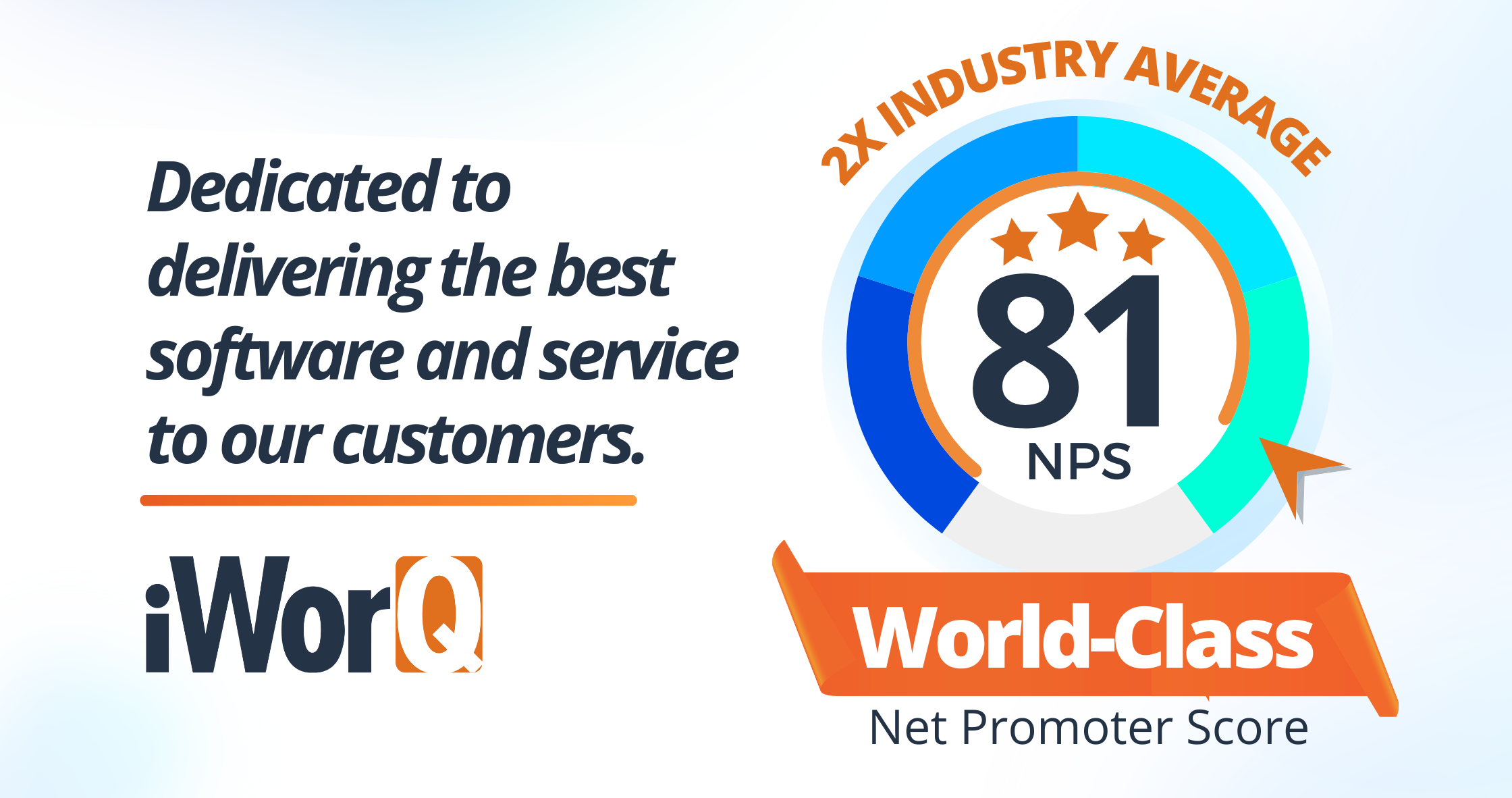
iWorQ Receives World-Class Net Promoter Score of 81
Apr. 23, 2024
Jackson County, FL Transforms Operations with Cloud-Based Software
May. 16, 2024
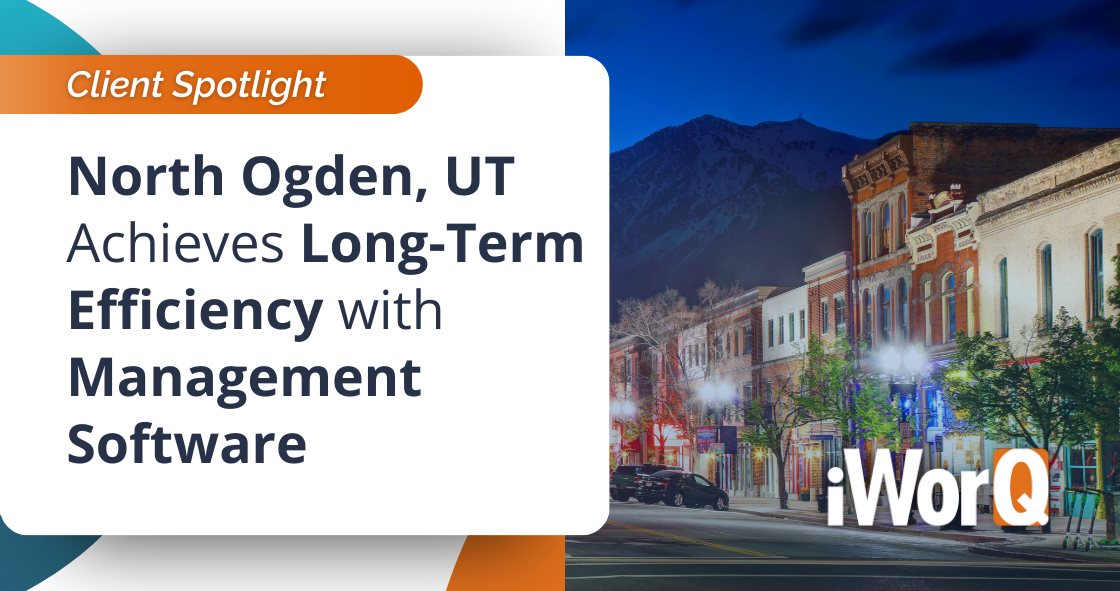
North Ogden, UT Achieves Long-Term Efficiency with Management Software

Sep. 02, 2020
Covington, KY Makes Reporting Issues Easy For Residents
View All News